← All articles
Nutrition
Nutrition
The keto diet: what it is, and what the science really supports
By Coach Adrian O'Mahony · 247FitMe Blog
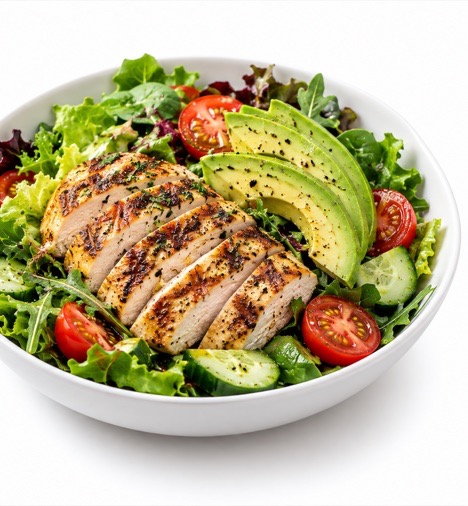
Hungry all day on every diet? Start here.
- Keto is a very low-carb, high-fat way of eating.
- It switches your body to burning fat for fuel, a state called ketosis.
- It can bring fast early weight loss and less hunger.
- It can improve blood sugar, triglycerides and “good” HDL cholesterol.
- It works best as a planned phase, followed by a healthy way of eating you can keep for life.
Coach Adrian's view45 years of keto
First, the science: what is body fat actually for?
- Body fat stores energy and releases it when your body needs it.13
- It insulates you against cold and heat.
- It cushions and protects your organs.
- It makes hormones that help control hunger, fullness and blood sugar.13
- You do need a little fat.
Now my take on it:
- So ask yourself: what is all that extra fat doing for you?
- A polar bear needs fur and blubber up to 10 cm thick to survive the Arctic.14
- You are not a polar bear.
- If you live in a warm country, with a roof over your head and clothes on your back, you don't need that extra insulation.
- Extra fat is simply stored energy that you carry around every day and never use.
- Keto teaches your body to switch over and burn that stored fat for fuel.
- I have lived keto and tested it on myself for over 45 years.
- My own results, and my clients' results year after year, show me it is the best way to lose fat.
- In all that time, I have never changed the advice I give.
- Follow the plan and keto will work for you.
- No guesswork.
- No voodoo.
- No yo-yo.
- No magic pills or potions.
- Just a proven plan that works.
Coach Adrian O'Mahony
The science is from the sources listed below. The rest is Coach Adrian's personal experience and client observations.

What is keto, in plain English?
- A ketogenic, or “keto”, diet is a low-carb, high-fat eating plan.
- Carbohydrates make up only about 10% of what you eat, with plenty of fat and some protein.12
- That usually means 20 to 50 g of carbohydrate a day.11,12
How keto switches you to burning fat
- Normally your body runs mainly on sugar from carbohydrates.
- When you cut carbohydrates right down, your body runs out of stored sugar and starts burning fat instead.2,15
- Your liver turns that fat into ketones, which fuel your body and your brain.2,15
- This is called ketosis, and it usually takes about 3 to 4 days without carbohydrates.2
- Ketosis is not the same as ketoacidosis, a dangerous condition linked to type 1 diabetes.
The benefits: what the science says
Strong evidence Good evidence Early research
1. Faster weight loss at the start Good evidence
- Low-carb eating usually brings more weight loss in the first 3 to 6 months.2
- European obesity guidelines found a very-low-calorie keto diet brought significant weight loss in the short, medium and long term, more than other diets of the same length.3
- In an Italian study, people did two short keto phases with Mediterranean-style eating in between and after, and went from an average of 100.7 kg to 84.6 kg in a year, with no overall regain.1
- Some of the very first week's drop is water, which is normal.
2. Less hunger Good evidence
- People on keto tend to feel less hungry and have less desire to eat.4
- Feeling less hungry makes it much easier to eat less without fighting cravings all day.
3. Better blood sugar control in type 2 diabetes Good evidence
- Across 8 clinical trials with 611 people who had type 2 diabetes and were overweight, keto lowered HbA1c, the key long-term blood sugar marker, and body weight.5
- Diabetes UK recognises low-carb eating as a short-term option for some adults with type 2 diabetes who are overweight.6
4. Healthier blood fats Good evidence
- Keto tends to lower triglycerides, a type of fat in your blood.7
- It tends to raise HDL, the “good” cholesterol.7
- It can also raise LDL, the “bad” cholesterol, especially when you eat a lot of saturated fat, so the type of fat you choose matters.7
5. A proven medical history Strong evidence
- Keto isn't a fad: it has been used since the 1920s to treat children with epilepsy whose medication did not work.2,15
- It significantly reduces seizures in about half of the children who start it.16
6. More energy and focus Early research
- Many people report more energy and feeling more alert once they are in ketosis.15
- This is mostly based on what people report, so expect it to vary from person to person.
The honest truth about the long term
- After a year, keto still beats a low-fat diet, but by less than 1 kg on average.8
- The biggest reason weight comes back is going back to old eating habits.1
- That's why the plan around keto matters as much as keto itself: support, accountability and a clear way to finish.
How to do keto the healthy way
- Choose healthy fats: olive oil, nuts, seeds, avocado and oily fish.
- Keep saturated fat and processed red meat down.
- Eat plenty of leafy green vegetables for fibre, vitamins and minerals.
- Drink plenty of water every day.9
- Top up your salts, with foods like avocado, leafy greens and nuts.9
- Plan your exit: moving on to Mediterranean-style eating helped people keep the weight off.1
Your first weeks: the “keto flu”
- Some people feel rough for a short while as their body switches fuel.
- Symptoms can include a flu-like feeling, headache, tiredness, nausea, dizziness and trouble sleeping.9
- It is usually worst in the first week and fades over the first month.9
- Drink plenty of water and replace your salts.9
- Sleep well and keep exercise easy for those first days.
Keto is not for everyone
- Keto is not suitable for people with type 1 diabetes.6,12
- It is not suitable during pregnancy or breastfeeding.10,12
- It is not suitable for people with kidney disease, liver disease, pancreatitis or gallstones.10,12
- It is not suitable for anyone with an eating disorder or who is underweight.10,12
A word of note
- If you take insulin or certain diabetes medication, your blood sugar can drop too low when you cut carbs.10
- If you take a diabetes tablet whose name ends in “-gliflozin” (such as dapagliflozin or empagliflozin), keto can be dangerous for you. Don't start keto without medical advice.
- Very-low-calorie keto diets are only done under medical supervision.
- Coach Adrian's way is low carb and high protein, with healthy fats, not fat for the sake of it.
- If you're not sure of anything, do seek some medical advice.
Common questions
How fast will I lose weight?
- Most people lose weight fastest in the first weeks.
- Part of the first week's loss is water, then it settles into steady fat loss.
How do I know I'm in ketosis?
The signs most people notice:
- Your breath may change, because your body breathes out a ketone called acetone.11,12
- You feel less hungry.4
- In the first week or two you may feel tired or dizzy.9,11
- You may feel irritable or short-tempered for a few days.
- You may get headaches or muscle cramps, and sleep badly at first.9,11
- The scale drops fast at the start, mostly from water.
- These signs usually fade within the first month as your body gets used to burning fat.9
The surest way to know:
- A home blood ketone meter gives the most reliable answer.11
- A reading of 0.5 to 3.0 mmol/L means you are in nutritional ketosis.11
- Urine strips and breath meters can also show ketones, but they are less reliable than a blood test.11
Will I ever eat carbs again?
- Yes.
- Keto works best as a phase, followed by a balanced way of eating you can keep for life.1
Is keto bad for my cholesterol?
- It usually improves triglycerides and HDL.7
- LDL can rise, so choose healthy fats like olive oil, nuts and oily fish.7
The bottom line
- Keto can give you a fast, motivating start, with less hunger and better blood sugar.
- Do it the healthy way, with good fats and plenty of greens.
- Have a plan for after keto, so you keep the weight off.
Sources
- Paoli et al., Nutrients (2013, Italy): Long term successful weight loss with a combination biphasic ketogenic Mediterranean diet and Mediterranean diet maintenance protocol
- Paoli et al., European Journal of Clinical Nutrition (2013): Beyond weight loss: a review of the therapeutic uses of very-low-carbohydrate (ketogenic) diets
- European Association for the Study of Obesity, Obesity Facts (2021): European guidelines for obesity management in adults with a very low-calorie ketogenic diet
- Gibson et al., Obesity Reviews (2015): Do ketogenic diets really suppress appetite? A systematic review and meta-analysis
- Meta-analysis of ketogenic diets in overweight adults with type 2 diabetes: PMC9408028
- Diabetes UK: Low-carb diets for people with diabetes
- Bueno et al., British Journal of Nutrition (2013): Very-low-carbohydrate ketogenic diet v. low-fat diet for long-term weight loss: a meta-analysis
- Bueno et al. (2013), as above: 13 trials with at least 12 months of follow-up.
- Bostock et al., Frontiers in Nutrition (2020, Australia): Consumer reports of “keto flu” associated with the ketogenic diet
- Peer-reviewed review: The ketogenic diet is not for everyone
- Diabetes.co.uk (UK): Nutritional ketosis vs DKA
- healthdirect (Australian Government): Ketogenic diet
- Society for Endocrinology (UK), You and Your Hormones: Adipose tissue
- Guinness World Records: Most efficient insulation in a bear
- Epilepsy Society (UK): Ketogenic diets
- Great Ormond Street Hospital (NHS): Ketogenic diet: overview
This article is general information, not medical advice. If you're not sure of anything, do seek some medical advice.
Know what's for dinner tonight
Keto recipe videos for breakfast, lunch, dinner and snacks come with your membership, plus a 20-minute workout with Coach Adrian, 3 times a week.